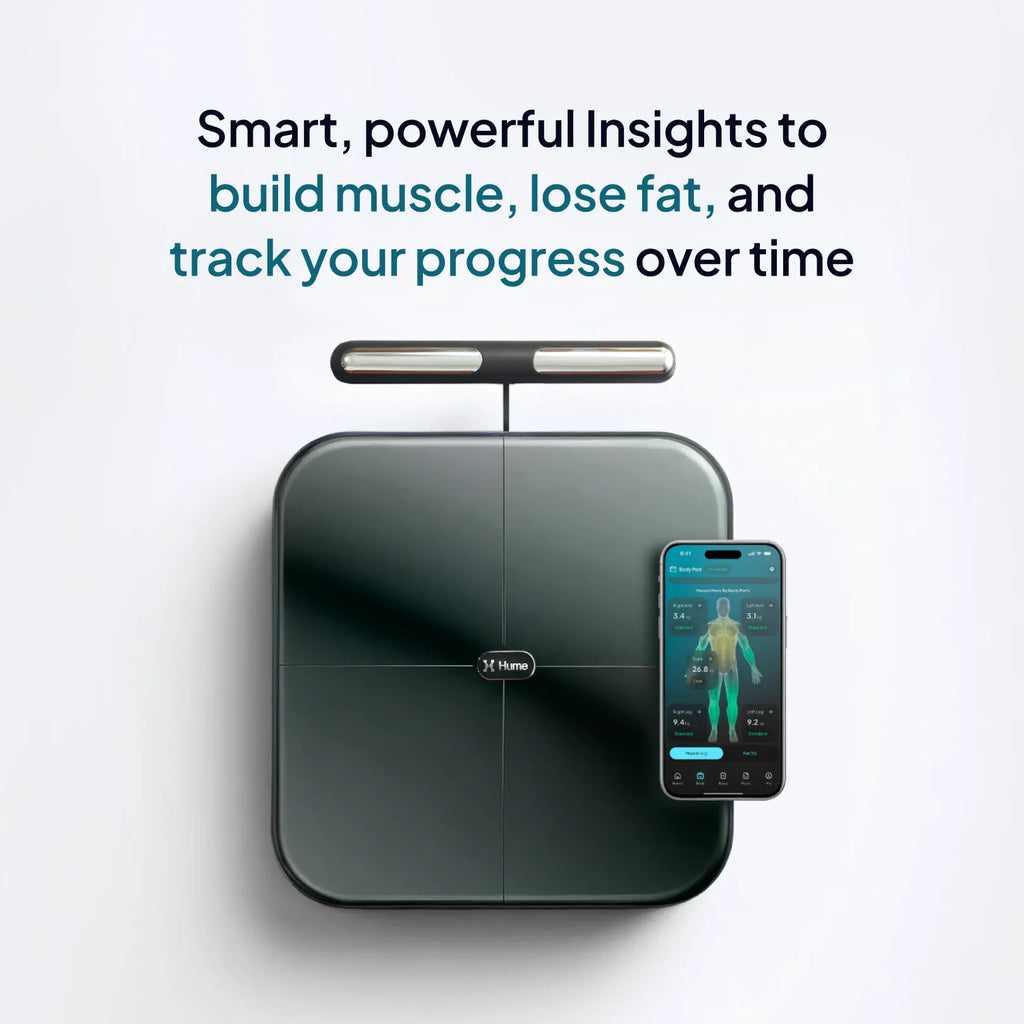
Personal tracking should earn its place in your day. Before you add a Hume device to your routine, use this checklist to think through the information you want, the features you need and how you will use them.
1. What do you want to track?
Separate body-composition check-ins from wearable tracking. Hume lists Pod and Band product families; decide which kind of interaction fits your goal before comparing models. “I want more data” is less useful than “I want a consistent weekly check-in.” [1, 2]
2. Which exact generation is in your basket?
Read the full product name, included items and current specification. Hume’s range includes similarly named versions, so an older review may describe something different from the item you are about to order. Save the product page alongside your order confirmation. [1, 2]
3. Which numbers will you actually use?
The Pod is marketed around multiple body-composition estimates. Choose a small number of measures you understand rather than assigning equal importance to every reading. These are not a replacement for a clinical assessment, and this guide has not independently validated the manufacturer’s accuracy claims. [1]
4. What is included without a subscription?
Check the current division between included app features and optional premium access. Make your own two-column list: essential to your routine, and interesting but optional. Compare the ongoing cost only after you know which column a paid feature belongs in. [1, 3]
5. Will the setup fit your household?
Check phone compatibility, account requirements and instructions for the exact device. If more than one person will use it, ask support how that works before assuming a shared purchase will suit everyone. A clear setup process is more valuable than discovering a limitation after delivery. [3, 4]
6. Will you keep using it after the first week?
Think about where a Pod would live or when a Band would be charged. Put a realistic check-in in your calendar. If the habit already feels inconvenient on paper, adding hardware may not fix it. Consistency should be a buying criterion, not an afterthought.
7. What happens if it is not right for you?
Read the live US shipping, returns and warranty information at checkout. Keep the order details and locate the official support route. Do not base your decision on an old promotional screenshot or assume another country’s terms apply. [4]
Your shortlist decision
Proceed when the device, included software and routine all line up with a clearly defined need. Pause when you cannot explain what you would do differently with the information. That is a more useful filter than the number of metrics on the box.